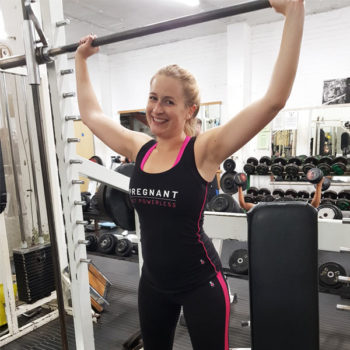
Exciting but slightly daunting seems to be the general reaction to a twin pregnancy! Make sure your pregnancy diet contains plenty of protein, calcium, iron, folic acid and Vitamin B12 with lots of fresh fruit and vegetables and extra whole-grains to keep your blood sugar stable. Aim for at least eight large glasses of water every day – flavour your hydration, with mint, fruit or cucumber.
Exercise can be more of a challenge if you’re pregnant with twins, but don’t give up – staying fit will improve your strength and stamina. Wearing supportive FittaMamma fitnesswear will help lift and support the extra weight of a twin pregnancy even if walking is all you can manage as your double baby bump gets bigger. Most importantly, don’t neglect your pelvic floor exercises, the additional pressure on your pelvic floor muscles makes it even more essential to ‘lift and squeeze’ regularly every day.
- Worldwide there are at least 125 million living multiples, of which one-third are identical.
- Twins are more likely to be left-handed. Up to 22% of twins are left-handed compared with less than 10% in the general population.
- Many twins develop their own language when they first learn to speak. Cryptophasia is common in up to 40% of twins although their private language generally disappears as they learn to communicate more widely.
- ‘Mirror Image’ twins account for about 25% of identical twins. Their hair falls in opposite directions, they have mirror image fingerprints and if one is right handed the other is left handed. More rarely, mirror image twins have mirrored internal organs with one twin having their heart on the right-hand side.
- The highest incidence of twin births worldwide is in Nigeria, with some sources attributing this to a high consumption of yams. There is some basis of fact behind this: yams apparently contain phytoestrogen, which can cause multiple eggs to be released at ovulation.
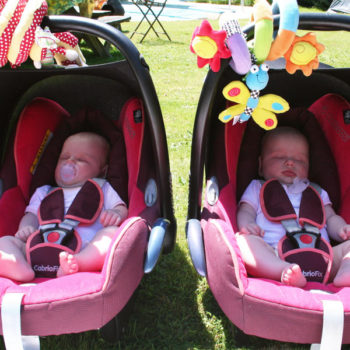
- A study by the University of Padova revealed that twins in the womb reach out and touch each other more frequently than they touch their own bodies, making distinct and gentle gestures to their twin sibling.
- The average duration of a regular pregnancy is 40 weeks. In a twin pregnancy this decreases to an average of 37 weeks.
- The number of twin births in the UK is increasing, largely as a result of more successful IVF treatments. Twins and triplets account for around 3% of babies born in the UK – you’re 20 times more likely to have twins as a result of IVF than via natural conception.
- Your chances of a twin pregnancy become more likely with age, with the odds increasing significantly after the age of 35.
- Our favourite ‘twin fact’ is the Russian father who was presented to the empress of Russia in 1853: he had been married twice and between his two wives had 72 children including 4 sets of quads, 8 sets of triplets and 8 sets of twins! Ouch.