-
 Nicola
The three stages of pregnancy yoga

Pregnancy is probably the most profound psychological and physical transformation your body will undergo. As well as being a time of joy and delight, pregnancy can also be time of anxiety, not to mention physical discomfort and emotional adjustment.
We asked Maria, from Pommama, who have a network of prenatal yoga teachers in London to share how yoga can help guide you through pregnancy, keeping your body and mind in balance as well as a preparing you mentally and physically for labour.
Maria writes: ‘Your body is in constant change as it goes through the different stages of pregnancy and so should your practice. It’s vitally important to be able to adjust your prenatal yoga practice to your ever-changing mind and growing body.
Let’s look at the three key stages women go through in pregnancy when it comes to their yoga practice. Medical professionals generally advise avoiding yoga before 12 to 14 weeks.
We suggest 3 key stages for your yoga practice during pregnancy based on bodily and mind changes as you go through the different trimesters.Stage 1: 14 – 22 weeks pregnant
An active pregnancy yoga flow should focus on creating space in hips and pelvis, prepping for a bigger belly and shifting awareness to changes in the body.
At 14 weeks, nausea usually subsides and energy levels return. You can feel more energetic than ever before and although your body gradually starts changing, you are probably keen to move. We recommend a dynamic flow yoga practice for the next six to eight weeks, allowing you to embrace the return of your energy. You may not notice a huge difference in your body shape, but certain modifications are needed to accommodate the growing baby.
At this stage you have a little surge of energy, any nausea may be subsiding, your pelvis is shifting slightly so you will need to make small adjustments such as standing with your feet hip-width apart rather than together. You can definitely feel the changes in your body, but you don’t have a big belly yet, especially if it’s your first child, so you are not really hindered in your movement.Stage 2: 22-32 weeks pregnant
You’ll need to start modifying your prenatal yoga flow to take into account your growing belly and tightness in the shoulders and back.
As your pregnancy moves into the second trimester you’ll begin to feel a little heavier. You can still do a flow class, but in much more mindful and slower mode. In your practice, you’ll need to be more observant and not push yourself while stretching, twisting and back bending. Focus on key areas such as shoulders, back and pelvic region. Poses need to be modified to take into account your growing belly and you’ll start using props to support certain poses.
Your growing belly and boobs mean that all the weight is now forward and as a result your shoulders and back can start to tighten. You hunch more and the ‘duck waddle’ starts to happen. The lower back is doing a lot more so you’ll need to focus on shoulder opening and back strengthening with bolsters and blocks to support you.Stage 3: 32 weeks onwards
In the final weeks of your pregnancy you’ll need to focus more on breathing and connecting to the baby, prepping mentally for birth.
Preparing for birth, both mentally and physically is the key at this time. Deep, nurturing breathing, tension releasing movements and mind-calming meditation help you prepare for the birth of your baby. Although you can (and should, if you have no medical issues) still move at this stage, setting intentions, sending love and devotion to your baby, visualizing the new life inside you and learning to keep calm with breathing are top priority.
Your belly is pretty big, you are in your final weeks of pregnancy but you are still not completely static. Your energy levels start to drop again at this point. The third trimester is much more internal; it’s a time to focus more on breathing and connecting to your baby with lots of hands on belly, affirmations and setting intentions. By this point, the baby is kicking and you really feel like it’s happening. The ligaments are getting softer. Be especially careful with the stretches at this point, because you can overstretch.
Listen to your body as you will feel different from day to day and from class to a class.
Do bear in mind the following while practicing prenatal yoga:
- Do not compress the abdominal or pelvis
- Avoid bouncing
- Don’t overstretch
- Avoid backbends, except for modified Cobra and Bridge
- Never allow breathing to become strained
- Reduce the width between feet when doing wide legged postures
- No unmodified inversions unless experienced
Pommama is a network of pregnancy yoga teachers in Central London bringing specialist antenatal yoga to you, wherever you are – at home, in the office, at any time of day. At Pommama, our aim is to help make your journey through pregnancy life-enhancing and enjoyable. For more information and tips please visit www.pommama.com
Try a Pommama class for less!
Use the code FittaMamma10 to receive a 10% discount on your first Pommama session*.
*The 10% discount applies to an individual class, valid until September. T’s & C’s apply – please contact Pommama directly for more information.
-
 Nicola
When can I get back to the gym after giving birth?

We asked midwife Jane Mason, founder of the Natural Birthing Company for her tips on getting back in to exercise after your baby is born.
Your bundle of joy has arrived and you are getting to grips with being a new mum, but if you’re used to fitness and exercise in your life you may be desperate to get back out there. We’re all agreed that regular exercise can help you to relax, feel more energetic and obviously keep you fit – but in the early days of Mammahood it can also help your body to recover from childbirth and may help prevent postnatal depression.
So let’s look at when and how you can start exercising after birth.When can I start to exercise after birth?
The best time to start exercising after birth depends on how your baby was born. If you had a straightforward vaginal birth, you can start gentle exercise as soon as you feel ready, building up to introduce high-impact exercise after your 6 week postnatal check. If you normally exercised regularly prior to giving birth and you feel fit and well you may well be able to start sooner – but don’t rush it!
Be realistic and patient, gradually increasing your activity and listening to your body along the way. If you are unsure or had a more complicated birth such as a Caesarean Section, third/fourth degree tear, large blood loss etc. it’s best to check with your Midwife, Health Visitor or GP who can advise according to your own circumstances.What do I need to be mindful of when starting to exercise?
It took 40 weeks to develop your pregnant body and it will take just as long to fully return to your pre-pregnancy physical self. Even if you manage to get straight back into your jeans after birth (and not many of us do!) your body is undergoing a lot of changes during this time. Bear in mind:
- Your core muscles (lower back, abdominal and pelvic floor) will be weaker than they used to be.
- Your ligaments and joints remain more supple and pliable for up to 6 months, so it’s easier to injure yourself.
- Your iron levels may well have dropped as a result of birth which can leave you feeling easily tired, so pace yourself and get plenty of rest too. (See you Midwife or GP if you are breathless, dizzy or tired from normal daily activities)
- If your lochia (postnatal vaginal bleeding) gets heavier or changes colour to become more red after activity, then this is a sign you are overdoing it, so slow down!
What’s the best postnatal exercise to start with?
Pelvic floor exercises are the best postnatal exercises to start with and these can be done as soon as you feel able after birth. The exercises will help to heal any perineal trauma (episiotomies, tears, grazes, swelling) as well as toning your pelvic floor to protect you from issues such as:
- Loss of bladder and/or bowel control
- Pelvic organ prolapse
- Reduced sensation or satisfaction during sex
To check if you’re doing them right here’s a link to a leaflet written by the Chartered Society of Physiotherapy and the Royal College of Midwives.
Gentle stretching is also great in the early days to help relieve any muscular discomfort that can result from labour or adopting a tense position whilst breastfeeding. If your birth resulted in spending prolonged time in bed, simple stretches will help you feel better in both body and mind.
If your baby is fit and well there is no reason why you can’t both head out for a walk as soon as you feel able; consider the pram as a new piece of exercise equipment to push! Gentle walks in the early days will help to blow the cobwebs away, the fresh air will do both you and baby good. When you feel ready to walk further, take routes that involve you walking up gradients, or increase your pace.
Remember to keep your back straight and have the pram handles at the correct height (your elbows should be bent at right angles).
Swimming is another great gentle exercise to get you moving as it supports your weight and therefore has low impact on your joints. It’s important to wait until a week after your lochia has finished and your stitches have healed.
Core strength
When your Midwife is pressing your abdomen during your postnatal checks she’s not only feeling where your uterus is but also if you have any separation of your abdominal muscles (diastasis recti) specifically the rectus abdominals or your six-pack muscles. Diastasis recti is very common but if it is very severe you may need to work with a physiotherapist to help draw the muscles back together. Getting your abdominal tone back is crucial to your core strength and provides essential support for your back, which is put through its paces as a new mum – but be careful not to overdo your abdominal exercises and avoid deep twisting poses which can inhibit the muscles from repair. If you are concerned about a gap in your abdominal muscles speak to your Midwife or GP.
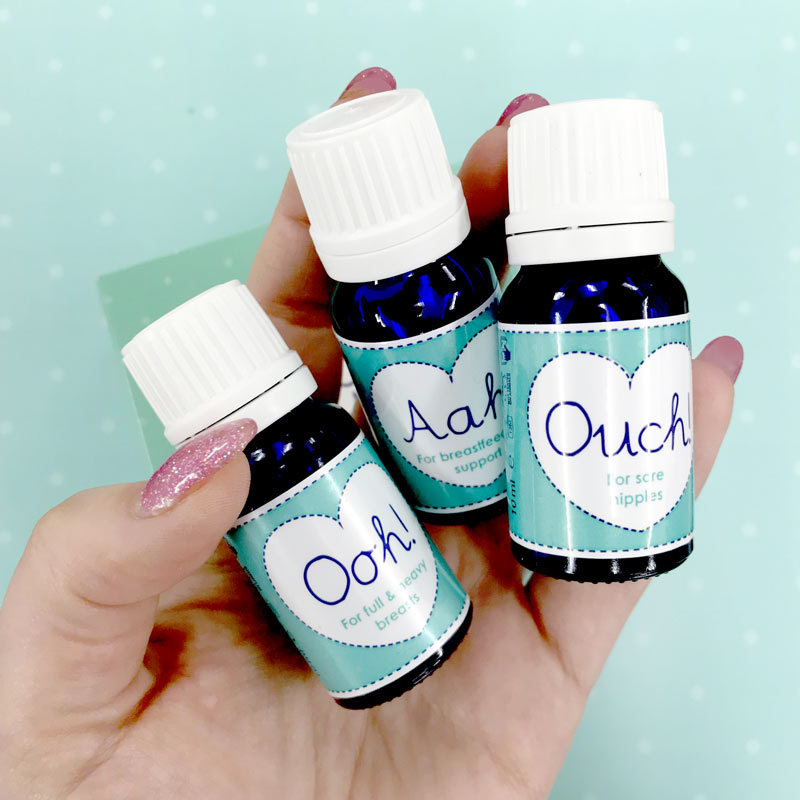
I hope this has given you some reassurance that exercising as a new mum is completely possible – just make sure you take your time and listen to your body.Natural Birthing Company’s products support you in pregnancy, labour and in life as a new Mamma. The range includes postnatal products to comfort and promote healing of your perineum and well as breastfeeding oils to comfort engorgement, low milk supply or sore nipples.
USE OUR EXCLUSIVE CODE FIT10 TO ENJOY A 10% DISCOUNT* ON ANY PURCHASE FROM NATURAL BIRTHING COMPANY ONLINE SHOP.
If you are unsure about anything or have any concerns whilst pregnant or as a new mum please speak to your Midwife or GP.
*Discount code cannot be used in conjunction with any other promotion, sale item or discounted product products.
-
 Nicola
Second time around things are always easier….or are they?
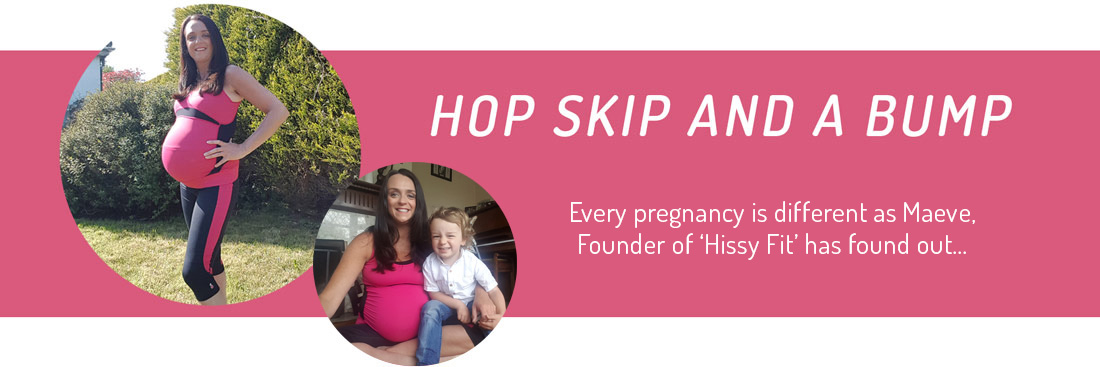
Maeve Kenny is a Fitness Lecturer at the University College Dublin; she’s also the founder of Hissy Fit which provides corporate and private wellness courses, including Running Clubs, Pilates and Bootcamps.
She says ‘Being asked to write an article is always a privilege, it gives me an opportunity to reflect on the topic and allows me to share some of my own experiences that will hopefully help or maybe even inspire those who read it.’
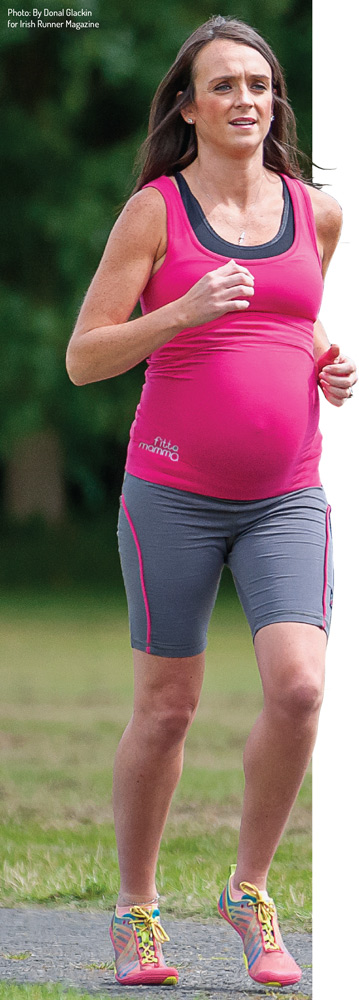
Maeve writes: ‘Fitness is a huge part of my life. I have always been passionate about training and leading a healthy life. Training is hugely important to me both personally and professionally.’
In August last year Maeve, who already had one child, suffered a miscarriage at 12 weeks. She continues, ‘It was a very difficult time and an awful shock. You never think that it will happen to you. After the miscarriage I decided that I needed a new focus and it became a 5km running event with my running club Hissy Fit Runners. This may sound simplistic, but it was the time spent training with amazing people, being outdoors and getting my body moving again which really helped me mentally, and within 6 weeks we were pregnant again! We feel very blessed by how lucky we were but I firmly believe that exercise is one of life’s most natural medicines and it can heal and work wonders.
When I learned I was expecting for the third time I knew my pregnancy fitness regime would be modified to some extent, and this time around it came a lot sooner than my previous pregnancy.
Obviously staying fit is incredibly important to me at all times, so being pregnant is no different. When I was pregnant with my first child I was so eager to keep going at everything. I ran and practiced Pilates till I was 8.5 months pregnant – whilst I did feel good most of the time doing it also put me under a lot of pressure to keep it up. I felt I needed to be an example and prove that I could do everything.
After my little boy was born I returned to training far too early. I didn’t allow my body to rest and heal and I pushed myself to try and get back to my previous fitness level. I wanted to do it all, be the best mum, run a business and be back running Personal Bests but the pressure resulted in Post Natal Depression which I suffered for over a year. This was a very difficult diagnosis to swallow. I never imagined I was someone who would ‘get’ PND? I must have had grandiose ideas of who I was, Post Natal Depression can happen to anyone. Especially as first-time mum’s we are so vulnerable after a baby is born. It’s all new and a major transition in life. We need time to adapt and realise that this little being will change our lives forever.
As difficult as it was, I think it has been a real learning time for me and a very humbling experience.
Moving on from PND the possibility of having another baby was both daunting and scary but also there was an excitement and a yearning to learn from the mistakes I had made last time round.
I knew this pregnancy was going to be very different for me. Of course I would always strive to keep healthy and fit but instead of allowing my head to dictate my training programs I listened more closely to my body. At just 5 months into the pregnancy I felt that running was no longer comfortable. It pained me to stop and hang up the running shoes so early but I realised that I would not put myself through the same pressure I did before. Instead I decided to research and find alternative exercises to keep me on track.Teaching and practicing Pilates has been fantastic, however with the growing bump it has its limitations, (my little bub is sitting low and dictating my range of movement) but that’s ok, I am delighted to be able to keep going comfortably without the pressure.
Pilates is one of those fantastic exercise regimes that is gentle and safe for pregnancy. Taking a class with an instructor who is aware of the changes and knows how to look after you and your growing baby will have fantastic benefits.
Regular, gentle stretching, is keeping me mobile and will also really help in the preparation for labour. There is a lot of focus on the baby generating force and ‘pushing’ it’s way out, however as mother’s we can help this transition by opening up the pelvis and practicing some pre-labour exercises that will help the baby rotate and navigate its way into the world.
Exercising in pregnancy is fantastic, but it’s ok to scale it back and also to rest. Be kind to yourself and conscious that you’re creating a new little person which is amazing! I choose to exercise differently and yet I still feel the benefits. I’ve exchanged running for walking. Gentle Pilates and focusing on the best stretches and exercises for labour.
But however you adapt your exercise routine, it IS important to stay active. I will still need to keep up with my amazing little toddler AND manage a new born baby, my fit pregnancy will benefit ALL of us!’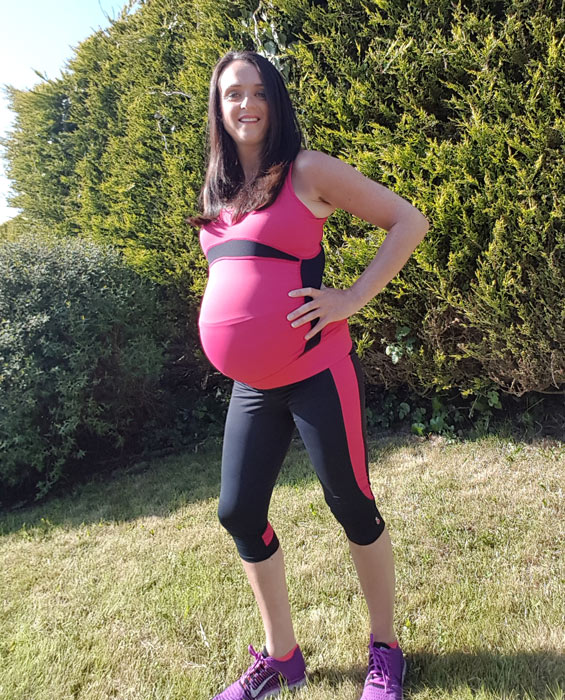
Connect with Maeve:
Website | Facebook | Twitter | YouTube
Get the look:
1st Photo: Maeve is wearing our Maternity Exercise Shorts teamed with our High Support Top in Raspberry.
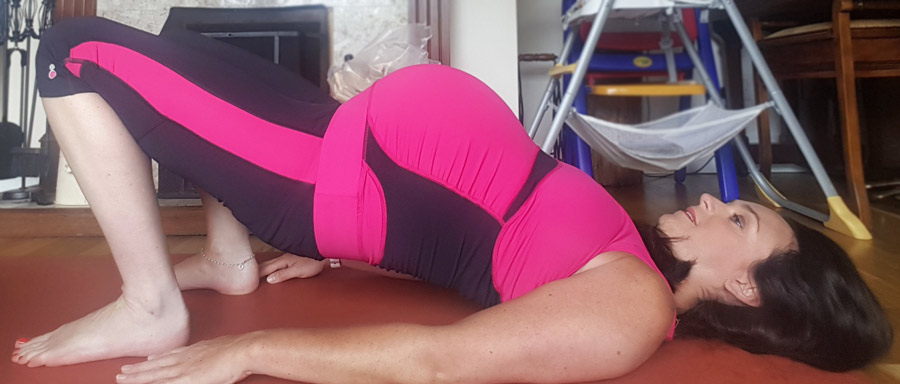
2nd and 3rd Photo: Maeve is wearing both the top and the capris from The Ultimate Collection. -
 Nicola
Is ‘helpful advice’ putting you off your pregnancy workouts?
We invited Senior Midwifery Lecturer Dr Jenny Hendley to share her research into why women exercise during pregnancy and the factors that influence their activity levels. Her PhD exploring women’s decisions to exercise in pregnancy revealed some interesting dilemmas facing pregnant women who choose to stay active.
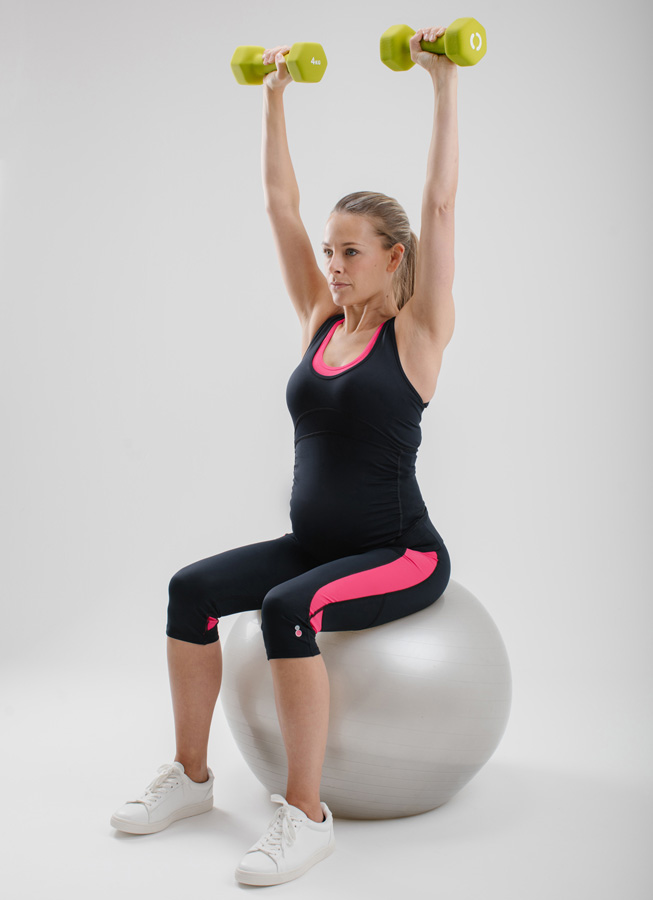
What the experts say
Current research firmly establishes a whole raft of benefits for pregnant women including alleviating many of the common complaints of pregnancy, such as tiredness, backache and oedema; helping to reduce maternal weight gain and providing a positive impact on mental health. Regular exercise in pregnancy also reduces the risk of pre-eclampsia, can treat or prevent gestational diabetes and has been suggested to shorten the length of labour, reduce birth complications and enhance postnatal recovery.
The benefits of exercising in pregnancy are widely accepted. A recent review of current research in American Journal of Obstetrics and Gynaecology 2017 says:
‘There is no intervention in pregnancy as impressive in its significant impact on women and babies’ health as regular exercise.’
It’s not just mum that benefits baby does too. Exercise helps to create an optimal environment for babies’ developing mind, body and brain resulting in a healthier heart, enhanced brain development and a reduced risk of obesity and its associated diseases as your baby grows up.In contrast to this growing body of research in favour of exercise during pregnancy there is no scientific evidence to suggest that moderate intensity exercise in healthy pregnant women has any negative effects.
Current guidelines from the Department of Health encourage women to adapt, rather than stop their activities throughout their pregnancy. They recommend that:
‘pregnant women who are already active should be encouraged to maintain their physical activity levels……… and all healthy pregnant women should aim to build up to 150 minutes of moderate physical activity spread throughout the week’
So what did Dr Hendley’s research reveal?
Despite the expert evidence and health guidelines it seems overwhelming that many women are still encouraged to prioritise rest over exercise. While the advice is very much based more on social and cultural expectations than sound evidence, both health professionals and lay advisors err on the side of ‘taking it easy’. It seems pregnancy attracts increased public scrutiny and unsolicited advice from lay people taking on the role of ‘the pregnancy police’.
Pregnant women are often held to a higher standard than other people, based on the idea that women should be willing to sacrifice anything and everything for the sake of their unborn child.
For most women, the maternal desire to do the best for their baby is the driving force behind the choices they make and there is a natural inclination for Mums-to-be to follow health advice if they believe it will benefit their baby. And for many the advice means erring on the side of caution and scaling their exercise routine right back ‘just in case’. Sound familiar?
Ironically, this ideology exposes women to far greater risk, with growing concern regarding the negative health consequences of inactivity amongst pregnant women.
Precautionary advice to ‘take it easy’ pays scant regard for the good sense and instinct of the mother herself.
Prescriptive health advice is based on the idea that the general public will not understand the evidence so there is a need to dilute or adapt it into recommendations. This is further compounded by the fear of litigation which makes many policy makers and care providers cautious about recommending exercise.
Dr Jenny Hendley concludes: ‘The best interests of the mother and her unborn child are at the heart of maternity policy and practice. Health and fitness professionals should be assured that, above all, women themselves have their unborn children’s best interests at heart, and ultimately support and trust them to make the right decisions.’
FittaMamma adds: ‘Listen to your body and remember the talk test: if you are exercising so hard you can’t continue to chat, ease up and slow down. But exercise during pregnancy is good for both of you, don’t let others put you off doing something that has so many benefits for you and your baby.’Want to read more? Below are some links to the research highlighted in this article:
Review of research on exercise in pregnancy
Department of Health Physical activity in pregnancy guidelines
Issue 11
Fittamamma Magazine > Issue 11


