-
 Nicola
Pregnancy Fitness Book Reviews


Pregnancy Fitness

Julia Di Paolo, Samantha Montpetit-Huynh & Kim Vopni
The authors are three highly qualified women’s health and fitness professionals, who are clearly passionate about helping women to improve their prenatal and postnatal fitness.
They tackle birth preparation in the same way you might prepare for a race or a big event saying ‘Training for a big event requires deliberate, intentional movement that prepares the body to perform, reduces the chances of injury and primes the body to heal once the event is completed. Training for birth is no different.’
It’s sound advice and one they fully explore and explain throughout the book.
Most importantly this book gives a comprehensive guide to the physiological changes your body undergoes during pregnancy, helping you to fully understand, for instance, exactly what happens to your abdominals during pregnancy or the impact of pregnancy on your pelvic floor. The detailed information about how to look after and exercise your pelvic floor during and after pregnancy is exceptionally useful.
This comprehensive book is a clear and concise guide to pregnancy exercise, allowing you to tailor your prenatal exercise routine to your specific needs.There are trimester specific workouts for differing levels of fitness during pregnancy, including the all-important and often overlooked fourth trimester, recognising that you need to time for your body to heal after the birth of your baby.
The chapter on functional movement for motherhood is invaluable, training your pregnant body to meet the demands of carrying and managing your baby. How many Mammas are prepared for the awkward movements involved in manoeuvring a seat plus baby into the back of your car or lowering a sleeping baby into a cot? And correct posture whilst baby wearing will do wonders for avoiding back ache!
If your goal is a fit pregnancy, a positive birth experience and controlled regaining of your postnatal fitness this is definitely one to add to your pregnancy reading list!
Published by Human Kinetics the book is available to purchase here.
The Complete Guide to Pregnancy and Fitness
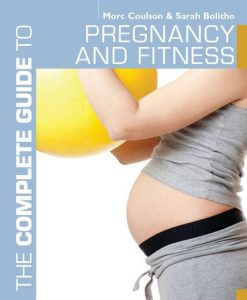
Morc Coulson & Sarah Bolitho
When it comes to judging a book by its cover (or at least it’s title!) this one fully fulfils your expectation – it is a very complete guide to pregnancy and fitness.
This excellent reference manual should be on the reading list for any fitness instructor working with women. It’s an invaluable guide that provides comprehensive information and relevant insight into pregnancy & exercise that would stand you in good stead if a regular class attendee should become pregnant and need special advice, or if an expectant mum has opted to join an existing class!
The book ably covers subjects such as planning safe and effective exercise programmes, motivation and goal setting combined with a comprehensive programme of more than 40 pregnancy exercises with detailed and easy to follow instructions that can be carried out with minimal equipment.
But whilst the book is aimed at fitness instructors it has much of value to anyone who might want a greater understanding about how to exercise during pregnancy, the benefits and the contra-indications to take into consideration.
The book provides well-presented information about the physiological changes to a woman’s body and in particular about how the changes affect exercise in pregnancy. Simple, easy to assimilate tables list information about subjects such as thermoregulation, respiration and WHY women suffer from niggles such as heartburn in pregnancy or varicose veins!A very useful reference book that is relevant to a much wider audience than the fitness professionals it is intended for.
Published by Bloomsbury ‘The Complete Guide to Pregnancy and Fitness’ is available from all good bookshops or click here.Morc Coulson is senior lecturer and the programme leader of Sport and Exercise Science at the University of Sunderland. He is the author of a number of books for fitness professionals including The Advanced Fitness Instructor’s Handbook (2008) and Practical Fitness Testing (2009).
Sarah Bolitho is Curriculum and Business Development Coordinator, Fitness Wales. She is the co-author of Exercise Your Way to Health: Stress (2010). -
 Nicola
Simple Food Rules For Your Pregnancy Diet

Sometimes eating the right food for pregnancy can feel very complicated – there are lots of foods that are essential for your pregnancy diet, foods you should avoid during pregnancy and a whole raft of vitamins that you need for pregnancy nutrition.
We’ve put together some basic rules to keep it simple and help you decide what to eat for a healthy pregnancy!
-
Eat real food when you’re pregnant
That is – avoid food that has been concocted in a factory, processed by scientists not cooks. If you don’t recognise the ingredients as food, don’t eat it.
-
Go for a whole rainbow of colours
A healthy pregnancy diet should include as many different colours of fruit and veg as you can – think carrots rich in beta-carotene; lemons full of vitamin C or fibre-rich golden sweetcorn; green leafy vegetables crammed with folic acid; blueberries bursting with antioxidants; water-melon packed with vitamins and minerals …..so much colour, so much pregnancy goodness!

-
Go for lots of different tastes and textures
We’re not talking about complicated recipes (although don’t let us put you off if that’s what you enjoy). Think fresh crisp vitamin-packed salads; crunchy nuts full of fibre, fats and minerals; creamy yogurts and dairy products with oodles of calcium; a lean juicy steak full of pregnancy protein; warm, soft sweet potatoes oozing beta-carotene; oily fish with lots of Omega-3.
Get the idea? Including different food types helps to ensure you have everything you need for a healthy pregnancy diet.
-
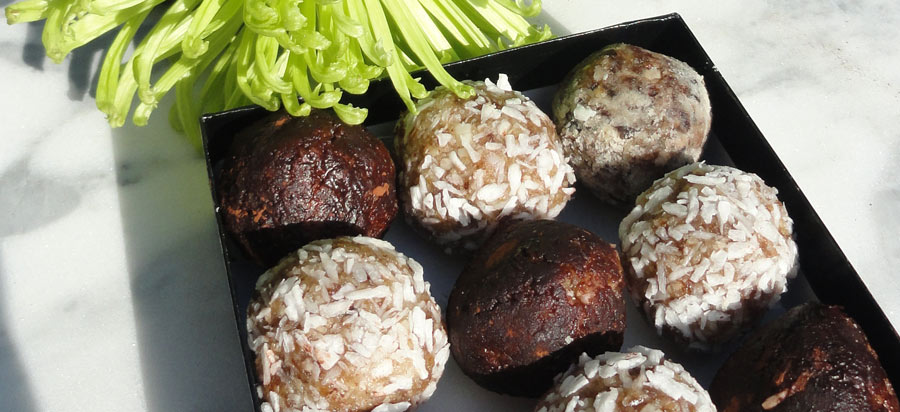
Buy your snacks from a veggie shop – not a sweet shop!
Or make your own pregnancy snacks from dried fruits and nuts and keep them handy so you’re not tempted to tuck into a bag of sweets – or reconstituted corn and chemicals
-
Grains are good
White flour doesn’t offer any of the benefits of whole grains, unless there have been supplements added. Choose brown bread over white, wholemeal pastas over white and enjoy the added fibre, B Vitamins and healthy fats that whole grains provide. Think constipation and pregnancy piles and reach for a wholegrain loaf.
-
Avoid chemical additives
If food contains ingredients with unpronounceable names that you wouldn’t keep on your kitchen shelf you can be sure it’s been added to make the food look right, taste different or last longer. Where did you read E219 (Sodium methyl para-hydroxybenzoate) or E110 (sunset yellow) are good for pregnancy nutrition? We’re not saying they will harm you or your baby – just that we’d avoid eating them!

-
Don’t skip breakfast
A good night’s sleep (or even an interrupted night’s sleep) means you’ve probably gone for at least 7 or 8 hours without a proper meal. You need to break your fast – especially as your baby will help herself to what she needs. Make sure neither of you are missing out on essential pregnancy nutrition and make time for breakfast. Our power porridge is full of slow release energy to keep you fuelled throughout the morning or go for protein rich eggs.
-
-
 Nicola
Ease Aches and Pains With Pregnancy Yoga
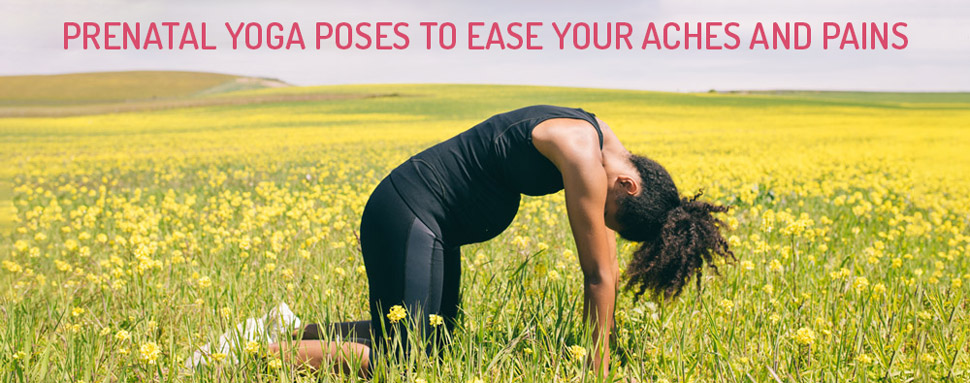
Prenatal yoga poses to ease your aches and pains
Prenatal yoga improves your strength and flexibility, preparing your body for the birth of your baby and can help alleviate stress and tension, lowering your blood pressure and calming your mind. You’ll also find the breathing techniques practised during your prenatal yoga sessions are invaluable when it comes to managing the pain many women experience during childbirth.
But it’s not just the pain and discomfort of birth than can be alleviated by practising yoga during pregnancy. The hormonal changes your body experiences during pregnancy, combined with the additional physical strain on your body, can cause all sorts of less enjoyable side effects from headaches and heartburn to simply feeling tired and lacking in energy.
We’d like to share our favourite prenatal yoga poses to help ease some common pregnancy niggles and discomforts: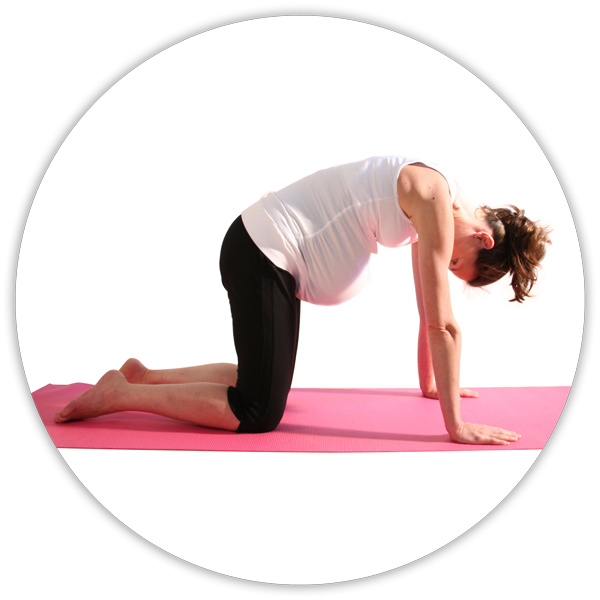
Tense shoulders and aching back?
It’s very common, especially if you’re still working and sitting at a desk all day.
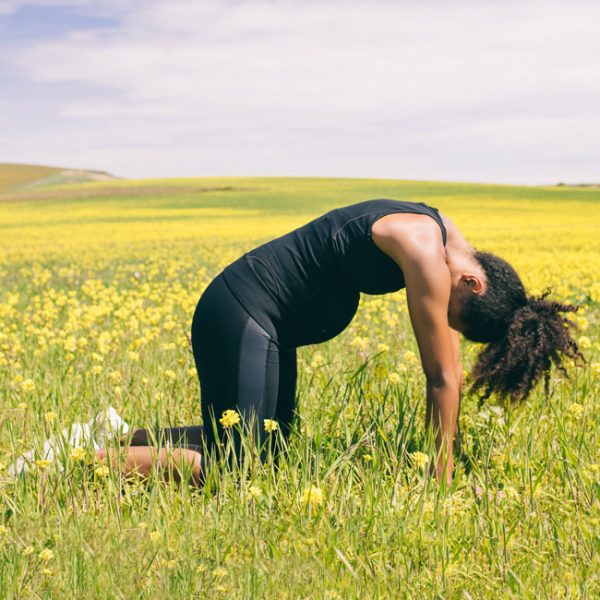
Cat Pose releases tension in your upper back and shoulders, taking the pressure of the baby off your spine. Take it slowly for maximum benefit.- Start on your hands and knees, hands planted firmly on your mat below your shoulders, knees under your hips and your back flat. Breathe deeply.
- Exhale, and arch your back upwards, drawing your belly button towards your spine and lowering your head so you look towards your legs.
- Inhale slowly and deeply, gradually lowering your spine vertebrae by vertebrae until your back is flat. Lift your head and gently stretch out your neck.
- Alternate these movements, smoothly lifting and lowering your back without letting it drop.
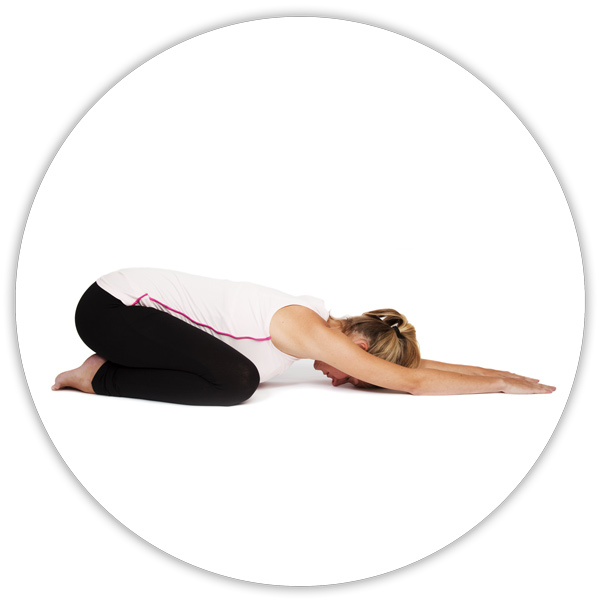
Lower backache?
Our favourite pose to ease backache is the Child’s Pose, taking the weight of your baby off your lower back and releasing tension in your pelvis and hip joints.
- Kneel on your yoga mat, knees wide apart, feet turned inwards. Come forward slowly, moving from the hips and lengthening your spine. Place your palms on the floor, stretching your arms out in front of you and lower your body until your forehead touches the floor….and relax.
- Come up slowly when you’re ready to do so.
- If you don’t feel comfortable in this pose lean over a large cushion or a bean bag, focussing on making sure your back feels comfortable and relaxed.
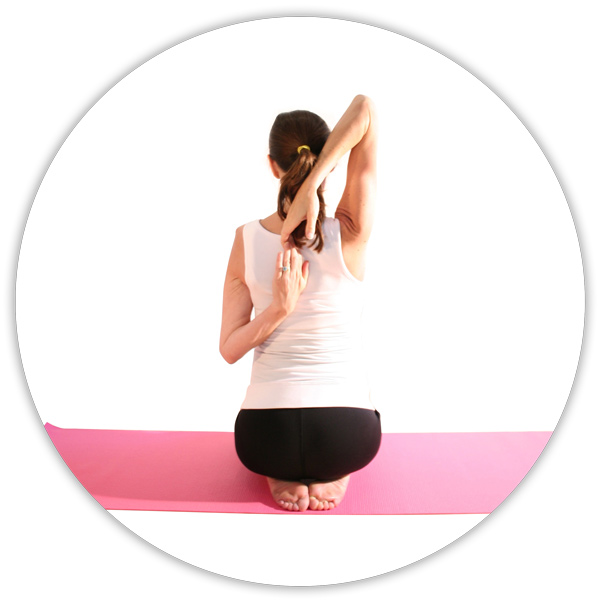
Suffering from heartburn?
Cow Pose is a simple yoga posture that helps make more space in your diaphragm, easing the pressure in your stomach which can make your heartburn worse.
- Sitting up tall, breathe out and lengthen your back, rolling your shoulders gently to release them.
- Stretch your right arm up, bend your elbow and drop your hand down the back of your neck.
- Now reach up behind your back with your left hand, reaching as high as you can so the fingers of both hands meet. If they don’t touch, use a yoga belt or a scarf to make the connection, working your hands as close together as you can without straining.
- Hold the pose for about a minute, lengthening your lower back and neck and breathing deeply. Make sure you keep your neck free and don’t allow your arm to push against your head.
- Release both arms, breathe deeply and relax for a minute before repeating on the other side.
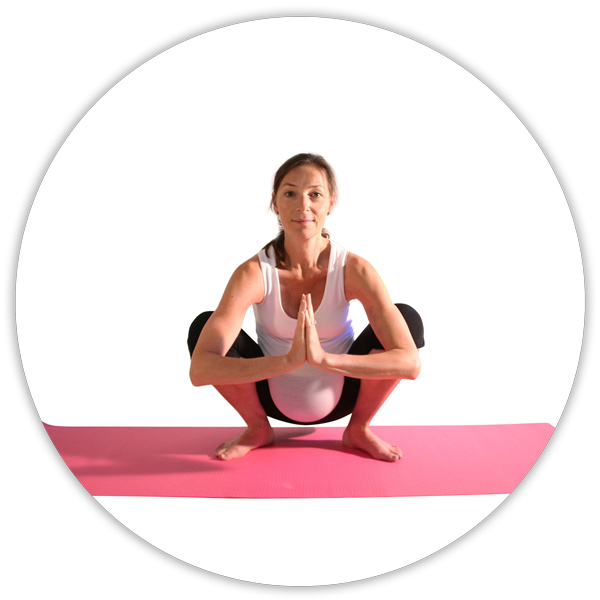
Preparing for birth
Garland Pose is a real mainstay of pregnancy yoga, opening up your hips and pelvis, lengthening and relaxing the muscles in your back and stretching your perineum. As you approach the end of your pregnancy it will encourage your baby’s head to engage in preparation for birth. If you can learn to be comfortable in this pose it can be an ideal birthing position offering the correct angle for the baby’s descent and making use of gravity to help the birth process.
- Stand with your feet about shoulder width apart, keeping them flat on the floor and simply lower yourself into a squat.
- Use yoga blocks under your buttocks if you can’t manage a full squat.
- Practise this regularly so it becomes easier and more comfortable to maintain the pose.
FittaMamma Tip: Don’t keep your FittaMamma Yoga leggings just for the yoga mat, enjoy the support they provide for your baby bump and lower back every day. We’re great advocates of living in your activewear!
-
 Nicola
Safe Prenatal Exercise With Jennifer Edmonds

Originally from Sydney but currently living in Bangkok, Thailand, Jennifer is a Pilates Instructor and Personal Trainer with 10 years’ industry experience. After many years as a competitive figure skater and gymnast Jennifer spent several years working in a corporate environment. Suffering from ongoing back pain she took up Pilates and was delighted by the results she experienced. Her new-found passion for Pilates led her to become certified in 2009. She has worked extensively in pre and postnatal training and is certified through Polestar Pilates, Elixr Pilates and Fitness Australia. Through her teaching, Jennifer aims to provide balanced, well-rounded workouts that inspire others to continue with a healthy lifestyle.
We spoke to Jennifer about maintaining an active pregnancy and keeping prenatal exercise safe…
Jennifer says, ‘During pregnancy, exercise can be a can be a little daunting and overwhelming. Is exercise during pregnancy safe for the baby? Is it safe for your body? Should you be doing less pregnancy exercise? Should you change your exercise regime all together?
There are so many benefits to maintaining a healthy exercise routine while pregnant. Regular training will:- Help increase your energy levels
- Improve strength to prevent back pain and poor posture
- Improve your sleep
- Decrease your risk of developing gestational diabetes
- Keep you fit for labour
- Assist in getting your body back in shape after the baby is born
Imagine if you weren’t pregnant and decided to stop exercising for 9 months – starting up again would be very challenging! Those who maintain an active lifestyle while pregnant usually have shorter labour and a much faster recovery process, too.
The most important thing to remember when planning your prenatal exercise program is that each person and every pregnancy is different. It’s important to find a training programme that works for you and your pregnancy – which might not be the same as the one that worked during a previous pregnancy.
Be prepared to scale back your training. Reducing intensity by 30% is a good guide, but every pregnancy offers unique challenges – listen to your body and recognise what feels right for you. You should always be able to maintain a conversation while working out, as opposed to being completely out of breath. Avoid high intensity exercise that causes you to overheat and be careful lifting weights that are too heavy – it’s better to go for lighter weights and more repetitions.
It’s worth finding yourself a good trainer who is specifically qualified in pre-natal exercise, don’t continue your regular training without taking qualified advice.If you’ve fallen pregnant and haven’t been following any kind of exercise plan before then, it’s still perfectly safe for you to start at any stage of your pregnancy, but discuss your exercise plans with your health professional and find a trainer who has prenatal qualifications.
Each stage of your pregnancy should be treated individually: in the first trimester, it’s common to feel nausea, exhaustion and a big decrease in motivation. If all you can do at the end of the day is collapse on the sofa, listen to your body and give in to those afternoon naps when you need to.
From the second trimester, most women find their energy levels are back to normal and are keen to start exercising again, so make the most of it! The third trimester brings different challenges as your bump gets bigger and your centre of gravity changes so extra care must be taken during your pregnancy workout.’
If you have any concerns about your health or the health of your baby, make sure you discuss your pregnancy exercise intentions with your doctor or midwife. Most healthy pregnant women should aim to exercise for at least 30 minutes every day but there are some rare, but serious, conditions which preclude some pregnant women from working out.Find Jennifer on Instagram.

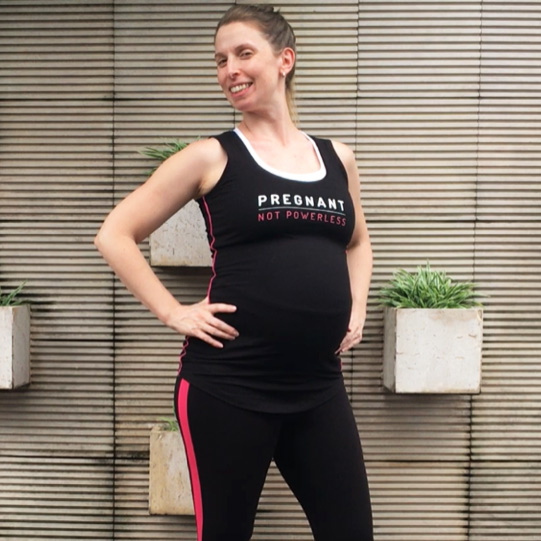
Jennifer is wearing our Pregnant Not Powerless Exercise Vest and our Fitness Capris.
FittaMamma Tip: Supporting your back as well as your baby can really help, especially when you’re lifting weights. FittaMamma maternity fitnesswear is designed to provide support where you need it, with the unique cross back technology of our tops and the high supportive waist panel of our leggings.
Issue 13
Fittamamma Magazine > Issue 13


