-
 Nicola
Make sure you do your kegels!
We asked Kim Vopni of Bellies Inc to share her advice on pelvic floor exercise for pregnant women. A pre and postnatal fitness expert and a mother herself she understands the demands of pregnancy, birth, motherhood and the benefits of a strong pelvic floor before, during and after pregnancy.
Chances are you have been told at some point in your pregnancy to ‘make sure you do your kegels’. While paying attention to the pelvic floor whilst pregnant is an absolute must, you’ll improve the benefits if you have a better understanding of what you’re doing, how to do it and why.
The Kegel Exercise was named after Dr Arnold Kegel. He saw women struggle with their pelvic floor connection after giving birth. He used a biofeedback device called a perineometer to help women learn to contract and relax their pelvic floor muscles. This act of contracting and relaxing the pelvic floor muscles became known as ‘the kegel’.
Exercising more, harder or faster is not always better – and that’s especially true with pelvic floor exercises. The true intention of a kegel is a balance between contracting, lifting and then letting go of that lift and contraction. It’s a voluntary exercise that can help retrain the pelvic floor, build endurance and increase strength.The pelvic floor works in coordination with the breath and is anticipatory, meaning it should work subconsciously. It anticipates our moves and ensures the inner core unit is ready to support us throughout the day. Things like posture, pregnancy and birth can lead to challenges like incontinence, back pain and organ prolapse. The good news is that the inner core and pelvic floor can be retrained. Using kegels in conjunction with breath work is very effective in pregnancy, in birth and for postpartum recovery.
The Core Breath as we like to call it, is a powerful approach to pelvic floor fitness in pregnancy and will optimize your pelvic health for life.
When you breathe in, the diaphragm descends, the ribs expand, the belly expands and the pelvic floor eccentrically lengthens. When you exhale, the pelvic floor recoils and contracts, the transversus abdominis co-contracts and compresses the belly, the ribs soften and the diaphragm rises back up. This happens all day long and when we harness this by adding in voluntary pelvic floor contract/relax cycles, it can really up the ante on your core training.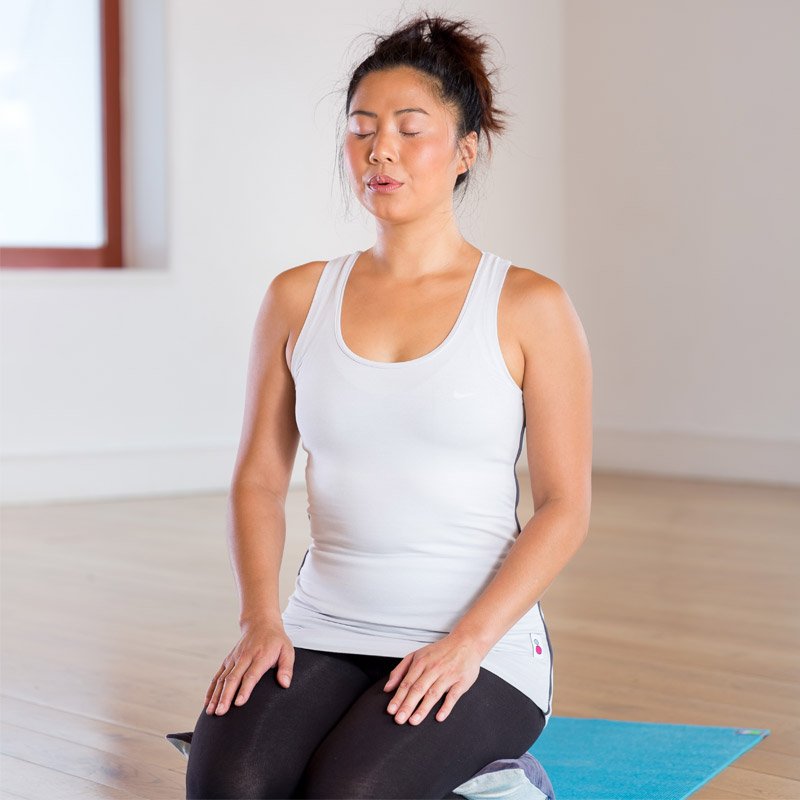
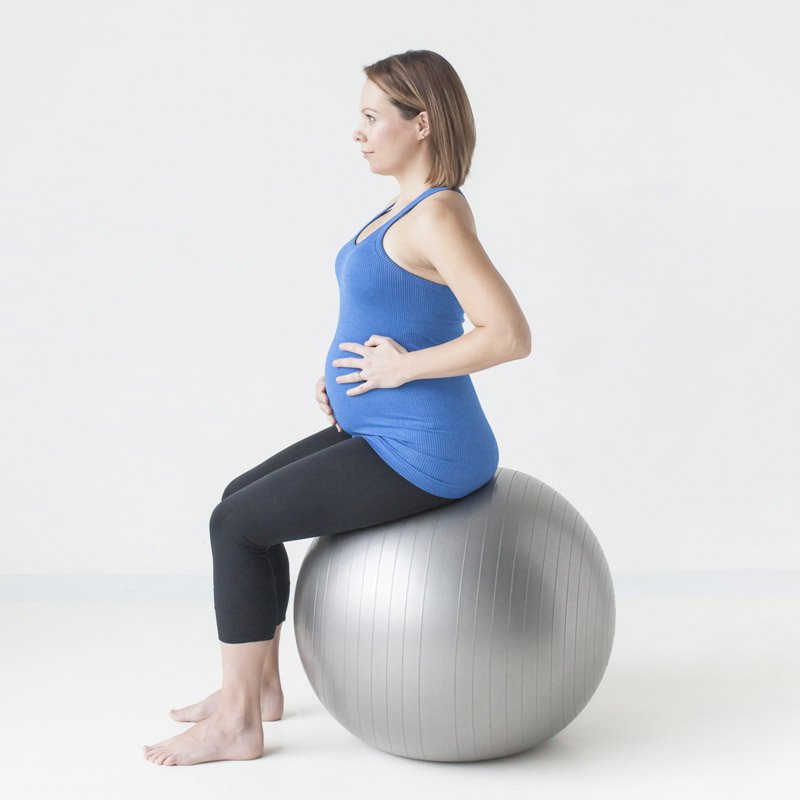
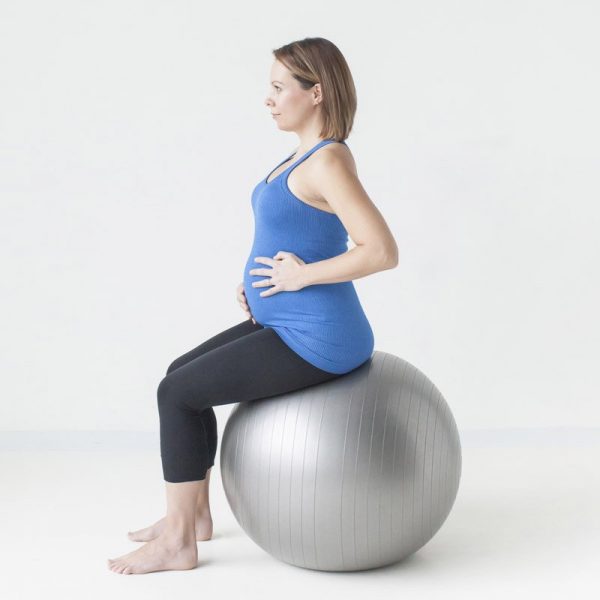
Try sitting on a fitness ball and pull the flesh of your butt cheeks outwards so you have a strong sense of your perineum on the surface of the ball. Ensure there is a gentle curve in your low back and that your ribs are not flared outwards but are instead soft, down and in line with your pelvis. Inhale and imagine breathing sideways into your bra strap. Feel the lateral expansion in your ribs, the overflow into the belly and the sense of fullness in your perineum on the surface of the ball. Now as you exhale, imagine sipping a milkshake through a straw with your vagina (I know…a bit odd but stick with me…) Visualize the edges of your vulva coming together and drawing upwards as you breathe out through your mouth and sip your milkshake with your vagina. As the next inhale starts, feel that lift and engagement subside. Congratulations, you have just completed your first functional kegel!
In your pregnancy, take about a minute a couple times a day to sit and connect with your breath and pelvic floor.As you approach your due date (sometime around 37 weeks or so) make this slight adjustment: inhale to expand then as you exhale keep that expansion. As you work to birth your babe you don’t want to be sipping up milkshakes. You want your pelvic floor to let go of tension, expand and yield to the sensations of stretch and pressure to allow your babe to enter the world. Practicing with this awareness before you are in labour will help you learn what to do ahead of time.
The Core Breath is the first postnatal recovery exercise you should do once your baby is born and the sooner you start, the better your recovery will be. Even if you don’t sip milkshakes right away, doing intentional breath work with the visualization will help increase circulation, stimulate nerve growth factor and enable muscle memory.
The advice of doing kegels is good but enhance your application of it with intention, consistency and adjustments. Use the Core Breath to prepare, recover and restore.
Bellies Inc is a company on a mission to bring the philosophy of mother roasting to modern mamas to be. With their innovative Ab System, they are helping pregnant women prepare for birth, optimize recovery and restore their core postpartum. The company was founded by 3 women, a pelvic floor physical therapist, and 2 pre/postnatal fitness specialists.
-
 Nicola
Why You Should Eat Tomatoes During Pregnancy

Tomatoes are available year round and are ideal to include as part of your healthy pregnancy diet. They bring flavour and richness to so many dishes ….AND they’re good for you! Sliced, chopped, raw, cooked or blitzed into a smoothie or gazpacho they are endlessly versatile and should be a ‘go to’ staple for pregnancy nutrition.
Share our top tomato tips and facts!
- Tomatoes are a good source of Vitamin C, an essential nutrient during pregnancy to ensure your baby develops healthy bones, teeth and gums. Tuck into a tomato alongside iron rich foods such as dark leafy greens or red meat as Vitamin C also helps your body to absorb iron more easily.
- Tomatoes contain high amounts of lycopene, an antioxidant that protects against cell damage. Studies have shown that lycopene in your pregnancy diet can reduce the risk of preeclampsia. And it’s the lycopene that gives them their lovely red colour.
- One medium tomato will give you around 22 calories, 5 grams of carbohydrate (including 1 gram of fibre and a gram of sugar) and no fat. They’re a good food choice for if you’re trying to maintain a healthy weight gain during pregnancy.
- Tomatoes include a whole range of other essential vitamins and nutrients for pregnant women including Vitamin A, folic acid, alpha-lipoic acid (that helps the body convert glucose into energy) , choline, potassium and beta-carotene.

- Tomatoes have a high water content and can add to your daily pregnancy hydration.
- High fibre in tomato skins helps to avoid constipation in pregnancy (oooh best avoid that if you can Mammas – constipation can lead to pregnancy piles)
- Too many raw tomatoes can exacerbate your pregnancy heartburn, so ease up if you’re suffering.
- Don’t dismiss tinned tomatoes – contrary to the usual rule that cooking destroys nutrients lycopene is actually absorbed more easily by the body after it has been heated.
- Tinned tomatoes are a great store cupboard standby to add to soups, stews and sauces.
- Just to set the record straight, tomatoes are a fruit, not a vegetable!
It’s easy to slice tomatoes over a salad or add them to a sandwich but try blitzing them with a stick of celery, a grated carrot and a squeeze of lemon juice for a delicious and speedy smoothie; chop them finely with spring onions, garlic, mashed avocado and a squeeze of lime juice for a simple guacamole dip or make a simple pasta sauce by sautéing finely chopped onions and garlic in olive oil and adding a tin of chopped tomatoes, salt, black pepper and mixed herbs and simmering for 10-15 minutes until the sauce is thick and rich.
Need some more tomato recipes? Check out our delicious tomato soup and fresh tomato and avocado salad. -
 Nicola
What Should You Wear When Running During Pregnancy?

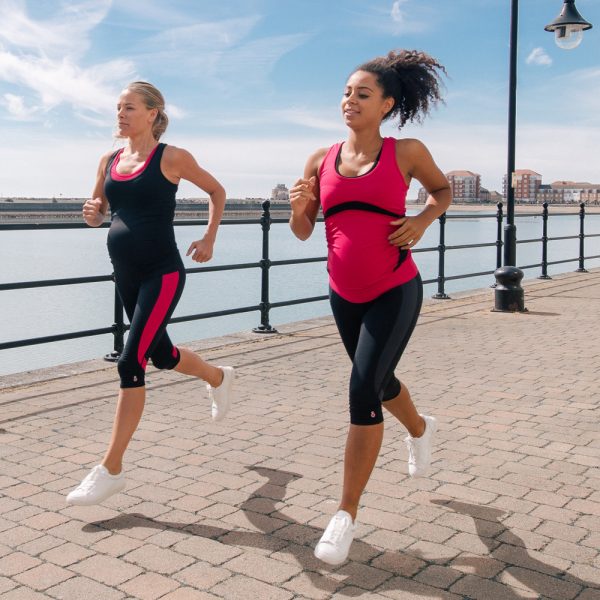
If you were a regular runner pre-pregnancy you’ll know how good it makes you feel: running is inexpensive, accessible and can be fitted into your life at times that works best for you. Now you’re expecting a baby, of course you want to carry on doing what you love. The good news is that you CAN run pregnant – running is a fantastic cardiovascular exercise for pregnant women and safe to continue just as long as it feels comfortable to do so.
But comfort is of course a key issue! Wearing the right running gear for pregnancy will help keep you going for longer. That’s longer runs and further into your pregnancy.
As you get bigger the last thing you need is leggings that fall down when you run or a top that rides up over your beautiful baby bump just as you’re getting into your stride. But most importantly you need fitnesswear that provides support where you need it, lifting and holding you securely so your bump doesn’t jiggle when you jog and your boobs are held comfortably with minimal bounce. And ideally it needs to look good, fit well and still be ok to wear after you’ve had your baby.The FittaMamma Maternity fitnesswear range was designed with pregnant runners in mind:
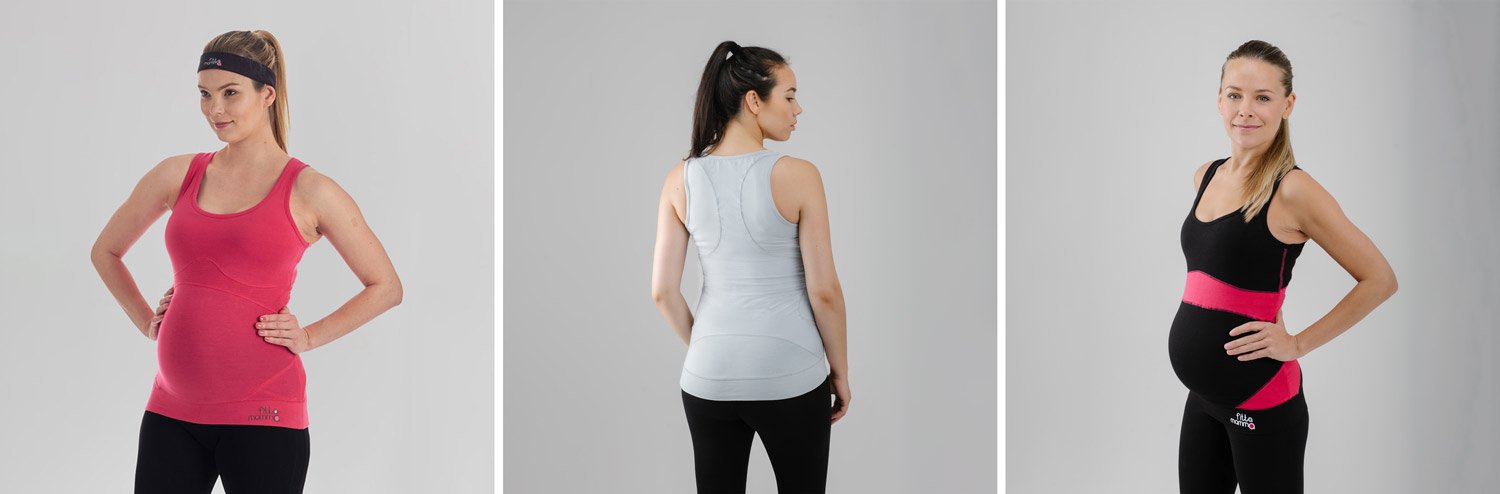
The FittaMamma Ultimate Top is a high performance maternity activewear choice for running and workouts.
The secret is in the unique cross back design of the back panel which lifts the weight of your baby onto your back and shoulders where you have more natural strength. We love the feel of the firm waistband which sits under your bump, adding support around your hips and pelvis (great when those pregnancy hormones start loosening your joints).
And there’s a soft built-in bra to supplement your sports bra to hold your boobs securely. Top marks for style, support and comfort.

The FittaMamma High Support Top is a value option with all the support you need for running and high impact pregnancy exercise.
Made from moisture-wicking cotton it has cleverly designed panels to hold and lift where you need it, combined with a super stretchy waistband to hold firmly under the bump.
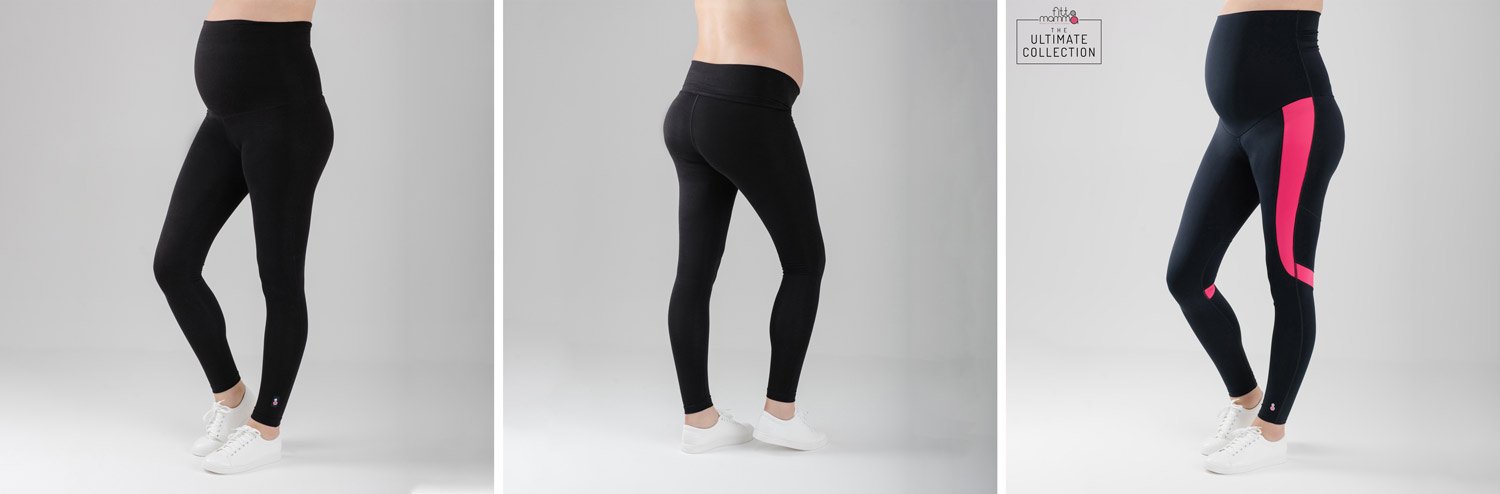
FittaMamma maternity exercise leggings have a deep supportive waist panel that offers all round support for your bump and lower back. Wear it over or under your belly for personal comfort. Both the standard cotton range and the high performance Ultimate range come in a choice of full or Capri length – ideal for pregnant runners.
Good news is that lifting and supporting the weight of the baby can ease the pressure on your pelvic floor and help alleviate the bladder issues so often experienced when you’re pregnant – especially when you’re running. Feedback from pregnant runners suggests FittaMamma maternity exercise clothes help ease the ‘need to pee’ issue.
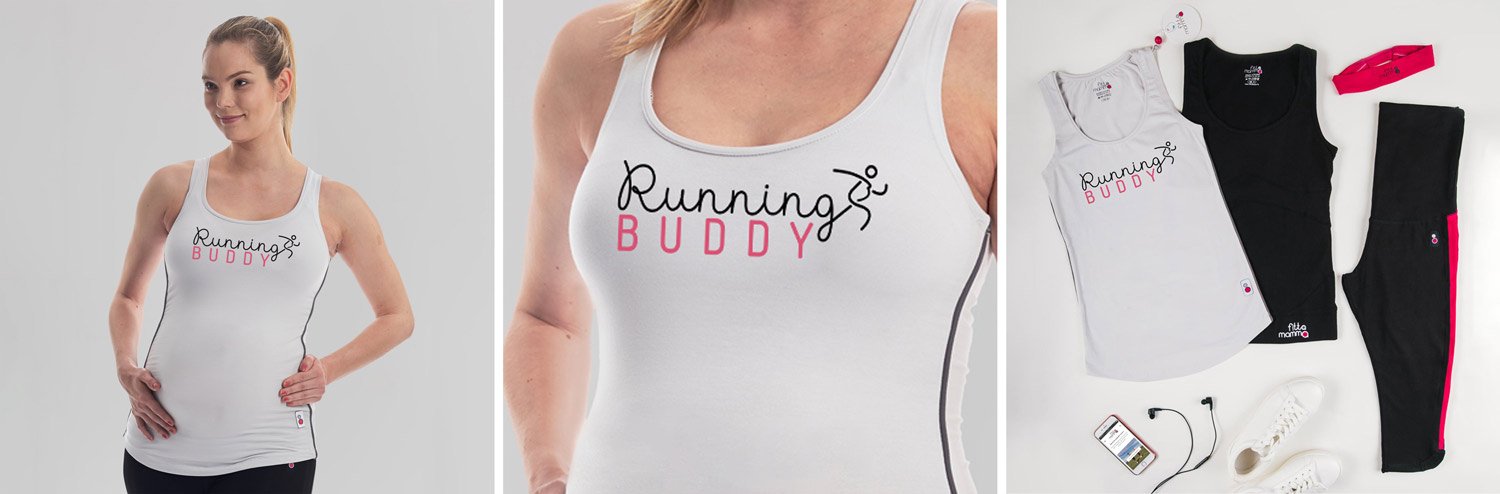
If you’re proud to be running pregnant, layering a ‘Running Buddy’ top is a great way to share the message! Perfect for buggy runs once baby is born too.
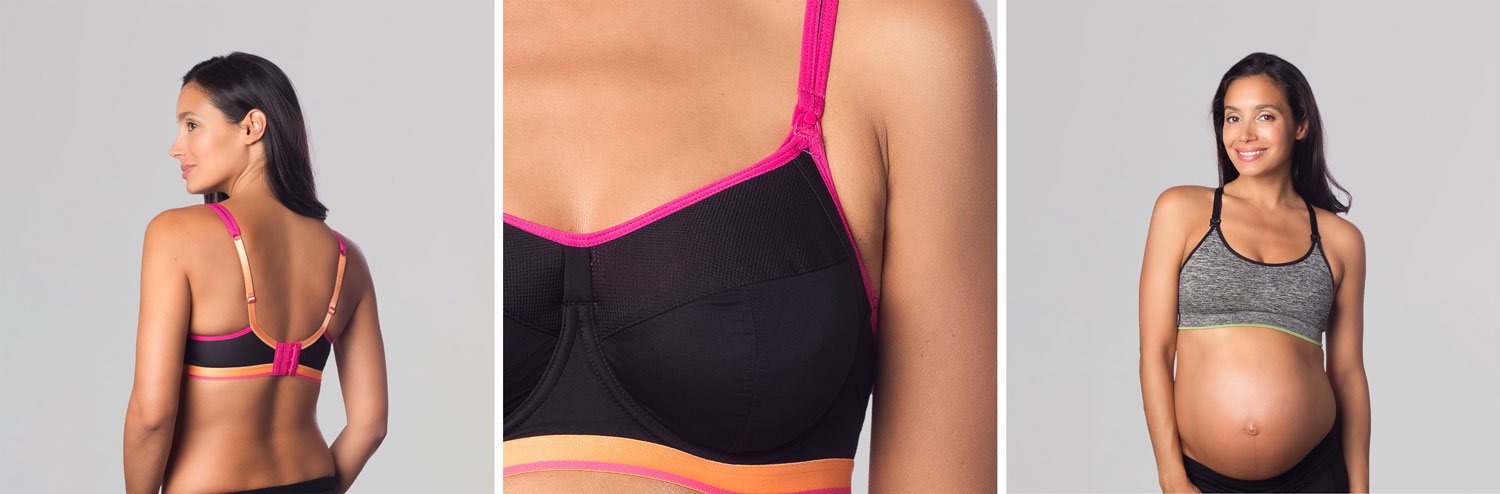
Wear a well-fitting sports bra – your breasts will be bigger during pregnancy and need the extra support. The Hotmilk nursing sports bra offers excellent support during pregnancy and is ideal for speedy access for feeding after your baby is born.
A good pair of running shoes is even more important when you’re pregnant to ease the impact on your joints and ensure you don’t slip. Your feet can increase in size during pregnancy so it’s well worth checking to make sure your running shoes fit properly.
A heart rate monitor is useful to make sure you’re not over doing your training – you should be able to carry on talking when you exercise but a monitor will give an accurate record. And don’t forget your water bottle!When to shop?
Just as soon as your bump starts to show! Why wait? Enjoy the improved comfort and support throughout your pregnancy and after your baby is born for postnatal exercise and running too.
Jenny Lee Allenwho writes for Run South Florida magazine adds‘A few quick tips for prenatal running: First, make sure you wear extremely supportive clothing. A high-impact sports bra paired with the FittaMamma High Support Top will keep the girls in place! I’ve also found that compression socks help reduce swelling in my feet and ankles.’Jeni Harvey of ‘Marathoning for Real Women’ recommended the FittaMamma High Support Top for running during pregnancy, saying: This top is extremely supportive of the bump – it describes itself as a “bra for your tummy” and that’s just what it feels like – but also of the back and chest as well. An inbuilt crop top is firm yet comfortable, acting like an additional sports bra, while the “unique back panel” distributes weight from the front across the whole back and shoulders, meaning that the weight being carried on the front is borne by the whole body, improving posture. It’s almost like particularly soft scaffolding for your back, bump and boobs.
A thick waistband sits below the bump, on the hips, and serves the useful double purpose of not just being supportive, but also keeping the top in place, thus preventing the riding up that is an issue with so many running clothes, particularly during pregnancy. In short, this is one supportive and comfortable running top.’FittaMamma Tips for safe running during pregnancy:
- Remember the talk test – if you’re running so hard you can’t continue a conversation ease up and slow down
- Don’t strive for a PB, the mantra should be ‘not so far and not so fast’
- Make sure you fuel up before you start and stay hydrated, carry a water bottle with you
- Warming up and cooling down is even more important when you’re pregnant
- If you have any concerns about your health or the health of your baby consult a midwife or health professional
-
 Nicola
How Important Is A Healthy Weight Gain In Pregnancy?
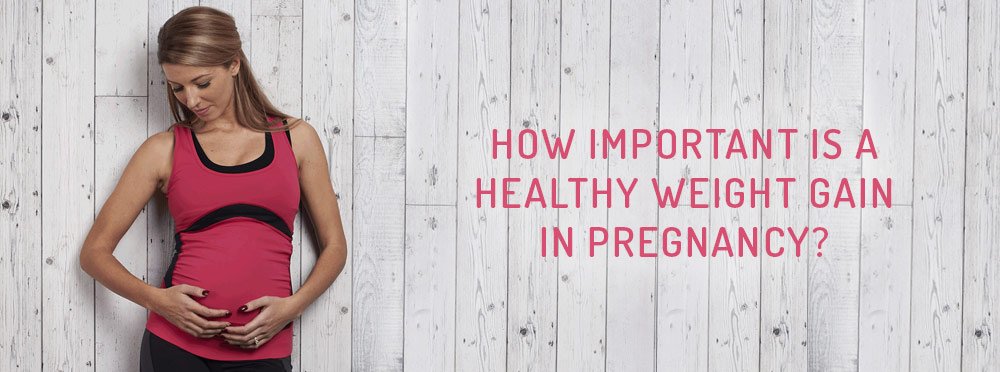
Midwives have called for clearer guidelines on weight and pregnancy following a recent report that gaining too much weight during pregnancy could put babies at future risk of insulin resistance and affect their blood pressure in childhood.
The report, published in Diabetologia, backed up previous research that gaining too much (or too little) weight during pregnancy is associated with a higher risk of adverse maternal and infant outcomes, including gestational diabetes mellitus and an increased risk of a caesarean birth.
The practice of weighing pregnant women regularly was phased out in the 1990s but Mandy Forrester, head of quality and standards at the Royal College of Midwives said: “There is a clear need for midwives to have the tools, guidance and training they need so that they can offer women the best possible support and care. This is especially pressing because of the potentially serious complications that can arise in pregnancy as a result of women being overweight or obese. It is a real concern that some midwives do not have access to that most basic piece of equipment, scales.”
It is a commonly held misconception that ‘eating for two’ means eating twice as much.
FittaMamma has long advocated that ‘eating for two’ means taking extra care when you eat to ensure you include all the right nutrients for you and your baby, without adding extra calories that won’t benefit either of you. A healthy pregnancy diet with all the right prenatal vitamins and nutrients and regular exercise will help you avoid piling on extra unnecessary pregnancy pounds. As a general rule, pregnant women don’t need any extra energy until the third trimester when you should increase your food intake by around 200-250 calories per day.
Following publication of the report, FittaMamma co-founder Alexandra McCabe was asked by Sky News to comment on whether regular weighing should be reintroduced, speaking alongside acclaimed former midwife, breast-feeding expert and author, Clare Byam-Cook.
‘It’s important to give the mothers the information if she’s gaining too much or too little weight gain during pregnancy” said Clare Byam-Cook. It’s an indication of how healthy the mother is, how the pregnancy is progressing, plans for labour and the effect on the children. We need to give mothers the guidelines so they are aware of the long term implications for their babies, including weight issues themselves later in life.
Alexandra agreed saying:The most important thing has always got to be the health of the mother and child and any way for the midwife be empowered to deliver that message is important, empowering the mother to make healthy, active choices.
But managing a healthy weight gain in pregnancy is not just about eating the right foods. Alexandra continued, “All pregnant women should be doing a minimum of 30 minutes exercise every day – we would advise coupling eating healthy nutrient dense food with regular physical activity.”
Medical experts agree that all healthy active women should aim for at least 30 minutes exercise every day during pregnancy.
Dr Daghni Rajasingam, a spokesperson for the Royal College of Obstetricians and Gynaecologists, said of the report: “These findings add to the growing body of evidence that shows the increase in risk of health complications from too much or too little weight gain during pregnancy.
“This has particular relevance in the UK where one in five pregnant women are obese. Women are encouraged to maintain a healthy weight before, during and after pregnancy by eating a well-balanced diet and taking part in regular exercise.”
Recent research by FittaMamma has revealed that expectant mothers agree that midwives are the most trusted source of information during pregnancy – it’s important that they have all the tools available to make sure women are fully informed.For a single and accessible source of information on healthy eating and exercise during pregnancy FittaMamma.com is always available!
Watch Alexandra talking on Sky News
What is a normal weight gain in pregnancy?
Most healthy pregnant women gain between 8-14 kgs (17.5- 30lbs) – the average is around 12.5 kg (or 27.5 lbs) which is of course considerably more than your baby will weigh.
How is your extra pregnancy weight made up?- At birth the average baby weighs around 3.3 kg (7.3lb)
- Expect the placenta to weigh 0.7kg (1.5lb)
- The amniotic fluid weights around 0.8kg (1.8lb)
- Your breasts will grow in size – that extra cleavage will add around 0.4kg (0.9lbs) to your weight
- And your body will store around 4kg (8.8lb) in preparation for feeding your baby
- The muscle layer of your uterus increases and will add around 0.9kg (2lb) to your weight
- Pregnant women have an increase of around 50% in the volume of blood circulating in their body –and this adds another 1.2kg (2.6lb)
- Extra fluid adds 1.2kg (2.6lb) to your pregnancy weight
Issue 15
Fittamamma Magazine > Issue 15


