-
 Nicola
Old Wives Tales

Everybody has a view about pregnancy… even complete strangers can give you helpful (or blatantly unhelpful) advice about your baby bump.
We’d like to explore some of those favourite nuggets of wisdom, wise comments and questions.
“Have you started eating coal yet?”
Unlikely as it sounds, many pregnant women experience unusual food cravings. The phenomenon is known as ‘pica’ and can include an appetite for coal, toothpaste, chalk or clay amongst other even more bizarre non-foodstuffs. Eating ice, or pagophagia is particularly common in the US and earth eating or geophagia is reputedly popular amongst pregnant women in Tanzania.
More common pregnancy cravings include ice-cream, water melon and salty snacks.“Has the nesting instinct kicked in yet?”
Is this really a thing? Apparently yes! As count-down to birth approaches oestrogen levels begin to rise and studies have shown that increased levels of oestrogen, combined with higher levels of oxytocin and prolactin can prompt the onset of more maternal behaviour. Preparing for your baby with unprecedented cleaning, decorating or arranging of very small garments on hangers is perfectly normal.
Make the most of it, you’re unlikely to feel like carrying out these tasks after the birth.“Oooh you’re carrying high – definitely a boy!”
Popular folklore suggests that women who carry their bump high and to the front are expecting boys and that if your bump is low and wide it’s DEFINITELY a girl (or the other way around depending on where you live and who you talk to). Interesting, as most pregnant women are quite subjective about the shape of their bump, the shape shifts depending on how the baby is moving in the womb and it changes again when the head engages. Unsurprisingly, tall, slender women tend to have different shaped baby bumps compared to short women with wider hips.
Studies of pregnant women have not revealed any correlation between bump shape and gender.“Breastfeeding works as a contraceptive”
No, it doesn’t. Whilst it can take a few months for your periods to get back to normal after the birth of your baby, and breast-feeding can delay this, you will ovulate before you have your first postnatal period. This can be anywhere between 6 and 36 weeks after your baby is born and there are plenty of examples of breast-feeding women becoming pregnant just weeks after the birth of their baby. Even with twins. Breast feeding is NOT an effective method of birth control.
But having babies close together can be a delight! (Honest!)“Forgotten something AGAIN? It’s baby brain”
Actually, research has shown there is some scientific evidence for baby brain. During pregnancy, women use the right side of their brain more, as they prepare to bond with their babies. The right side of the brain is related to emotional skills, making you more sensitive and preparing you to concentrate and understand your babies needs after the birth.
But whilst attention is focused on the right-hand side of your brain, the left-hand side can get a little less agile. It’s not your fault.
For sensible, down to earth advice click here. We’ll keep you updated with weekly information throughout your pregnancy.


-
 Nicola
Yes, you CAN run pregnant
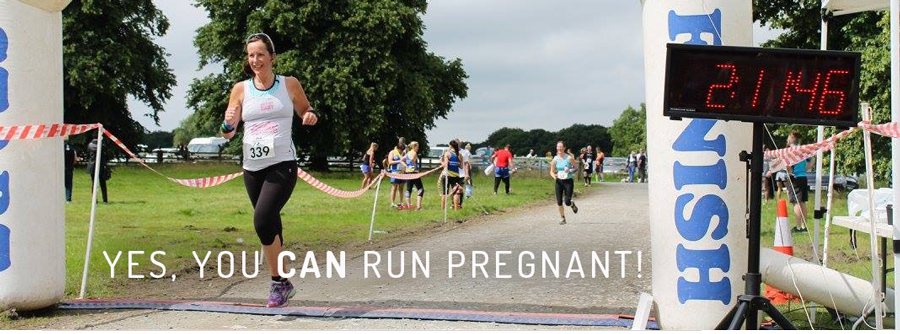
Even longer distances if that’s what you love best!
Running during pregnancy is a great cardio exercise: it’s accessible, cheap and you can fit it in at the times that work best for you. Our key advice for pregnant runners is ‘not too far and not too fast’ – and remember the ‘Talk Test’ if you’re running so hard you can’t hold a conversation then it’s time to ease up and slow down.
But don’t just listen to us! We asked pregnant marathon runner Jo Johnston to share her top ten tips for running during pregnancy. She has some great advice!- Go running first thing in the morning if possible. I find my bladder is stronger and my baby bump a bit smaller! It will also be cooler, so you’ll be more comfortable. Besides, by the evening you may well find you’re too tired or will have lost the motivation!
- Sign up for a race for a few weeks away. It could be a 10k or a half marathon, whichever you feel comfortable with. There’s nothing like being signed up for a race to motivate you to get out there and run when you’re pregnant!
- Be prepared that your running pace during pregnancy will slow and the effort will feel greater the further along your pregnancy you get. Pregnancy is the one time that despite consistent training you actually get slower! Don’t be disheartened as this is to be expected with the changes in your body and the extra weight.
- If you have a bad run or a day when you simply don’t feel up to running then don’t give up, just take it one day at a time – the chances are that next time you’ll be fine. Each pregnancy is different, and each day is different – remind yourself that you’ve had good runs and bad runs even when you’re NOT pregnant! I ran as many miles at 24 weeks pregnant as I did at 8 weeks, although it became harder and my pace slowed down. There were times when I thought I wouldn’t be able to keep going, but these turned out to be just “bad days” and I felt fine again the next time.
- Try and do some kind of strength training a few times a week to maintain strength in the core and glutes. Injuries post pregnancy are very common due to the hormone relaxin loosening your joints but if your supporting muscles are stronger the chances of this happening are lower. I aim to spend 20 mins 5 times a week strengthening my core and glutes for injury prevention.
- Don’t drink too much before your run but don’t be afraid to take a drink with you, even if you wouldn’t normally need one.
- Invest in well-fitting shoes and underwear and of course some great supportive maternity work out gear like the kit available from FittaMamma!
- When it feels tough remind yourself why you are doing it. Maintaining your fitness during pregnancy is of great benefit to both baby and mum. Every run you do now is one more in the bank for when you’ve had the baby, so it’s easier to get back into running post pregnancy.
- Go with what feels comfortable and stop for breaks when you need to. Walk up hills if you have to or build walking breaks into your training. It’s still great exercise.
- When the time finally comes where you feel you can’t run pregnant anymore do something else to maintain fitness if possible. I recommend spinning as its great for cardio and very low impact. I did 3 to 4 spinning classes a week during my first pregnancy up to and including my due date with no issues. Modify some of the moves if you need to though!
Click here for more tips for pregnant runners
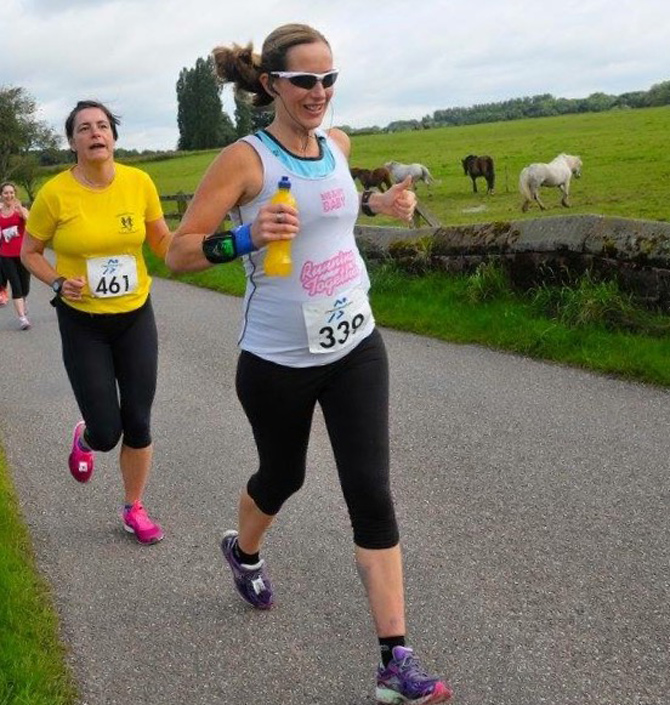
Take Jo’s advice about what to wear when you run during pregnancy! She’s wearing supportive FittaMamma maternity exercise Capris teamed with a ‘Me & My Baby Running Together’ vest. Get Jo’s full outfit by clicking on the image below, PLUS a High Support maternity vest and a slimline FittaMamma Headband!

-
 Nicola
New Year, New Baby on the way?
Here’s why regular pregnancy exercise sessions should be on your New Year’s Resolution list.
If you thought that pregnancy provided an excuse to pack away your trainers and avoid the January rush to the gym, read these facts and you’ll probably change your mind. Check out our ten good reasons to aim for a fit pregnancy.
- Women who are physically active in the first 20 weeks of pregnancy are around a third less likely than inactive women to develop pre-eclampsia.
- Many common complaints of pregnancy, including tiredness, varicose veins and swelling of ankles, are reduced in pregnant women who exercise.
- Active pregnant women experience less insomnia, stress, anxiety and depression.
- Women who exercise during pregnancy are up to 31% less likely to give birth to large babies, reducing the risk of needing a C-Section.
- Women who practice yoga 2 to 3 times per week experience a significant drop in their blood pressure
- Women with low activity levels during pregnancy increase the risk of medical intervention during labour (either a C-Section or a forceps delivery)
- Pregnancy exercise improves your circulation, pumping oxygen more efficiently around your body and through your placenta to your baby
- Regular exercise, improving your core strength during pregnancy, pregnancy Pilates and prenatal yoga can all help if you’re suffering from pregnancy backache
- Staying active during pregnancy will help you to avoid unwanted pregnancy weight gain and makes it easier to regain your pre-baby bod after the birth
- Babies born to women who exercise have improved vascular health and are more likely to have a healthy exercise habit themselves as they grow older

Wearing the right clothes will improve your confidence and motivation. FittaMamma maternity gymwear is designed to provide support where you need it, so you exercise with style and comfort throughout your pregnancy, wherever and however you choose to stay active.
Get started today with this pregnancy workout video.
-
 Nicola
Keeping Strong and enjoying a Fit Pregnancy
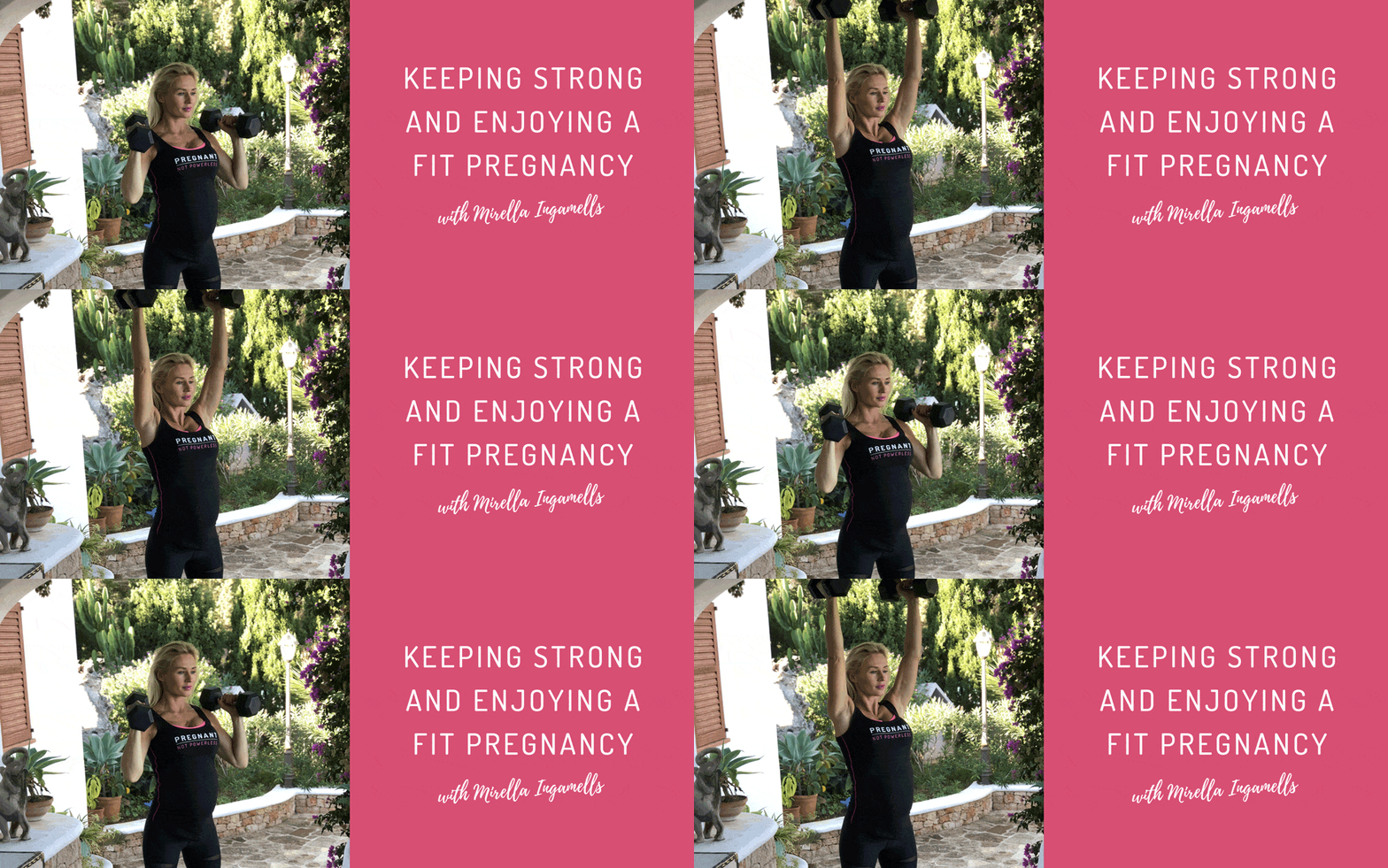
Mirella Ingamells of Strongmama is proud to be Pregnant Not Powerless!
She says: ‘I’m excited to be joining the Pregnant Not Powerless Movement to help dispel the pregnancy myth that pregnant women should avoid exercise, rest and be wary of any “abnormal” activity. Yes, there are a lot of people who still think like this unfortunately!
“Your pregnancy journey is a powerful one! The miracle of growing a baby human is nothing short of a superhuman power and should be a time to feel strong, fit and healthy as a woman. You have the choice and the power within you to look after your body and your baby. Choose to embrace the journey and you’ll come out feeling stronger than ever before!”
Whilst there are certain things you should take into consideration when you’re pregnant, there’s absolutely no reason why you can’t continue with an active pregnancy lifestyle. I’ve exercised throughout both my pregnancies and it’s honestly been the best thing I could have done for myself, my confidence, my health, general well-being and no less, the health of my babies! Let me tell you why…

As an ex-athlete, with a history of competing in various challenges, as well as on the WBFF (World Beauty Fitness and Fashion) World stage, being pregnant presented me with a brand-new challenge of staying fit and building a new type of strength. Not just a physical strength but strength by way of a healthy mindset to help me embrace all the physical changes that pregnancy brings. It can be tough seeing your body change shape, gain body fat, and have to deal with a rollercoaster of energy levels. BUT it’s all for good reason and exercising during pregnancy has definitely helped to boost my mood, to feel good and to improve my sleep, which in turn encouraged me to eat healthier and I was able to better deal with the hormonal changes my body was undergoing. There are so many positives to a fit pregnancy!
Pregnancy is a truly remarkable journey so it’s important to embrace it and look after your body. You’re growing a baby human, isn’t that amazing! And to be fit and healthy during pregnancy is going to help you grow and birth that beautiful baby, give it the best start in life and help you on your road to recovery after baby is born. Believe me, it doesn’t happen overnight, and the body just doesn’t “bounce back” like a lot of people think it does.
Looking after yourself and staying active during pregnancy is going to help you for the long-term!
So, what’s right for you?
Remaining strong, fit and healthy isn’t the same for every woman, just as every pregnancy is different and it’s important to have a routine that works for YOU! For most, exercising when pregnant is safe, but it’s so important that YOU listen to YOUR body. If something feels wrong or uncomfortable, then stop or reduce the intensity – and if you weren’t active pre-pregnancy, then now is probably not the time to start training for a marathon or lifting heavy weights! But you can do something, and you CAN exercise whilst pregnant. If you’re used to a certain style of training, then why not continue? You may have to consider some tweaks here and there but there is no reason for you to stop just because you’re pregnant. If you’re looking to embrace a more active pregnancy lifestyle, you could consider some gentle bodyweight workouts, walking or swimming a few times per week, or a prenatal yoga class. Just moving your body is going to be beneficial.
Many women and mamas are now standing up and speaking out to help support and educate other women to enjoy a more active and healthy pregnancy – like me!Check out this pregnancy workout video, filmed when Mirella was 32 weeks pregnant, taken from her Strongmama Pregnancy Guide.
Want to enjoy more of Mirellas’s pregnancy workouts? Look out for our next edition of Active For Two.
Issue 6
Fittamamma Magazine > Issue 6


